Independent Consumer Guide -- Updated May 2025
Looking for a cheap locksmith near me? We explain what fair prices actually look like, how to spot bait-and-switch scams, and how to hire a legitimate locksmith without overpaying.
These are realistic price ranges for the most common locksmith services in 2025. Anything significantly below the low end is almost always a scam price designed to get a technician to your location.
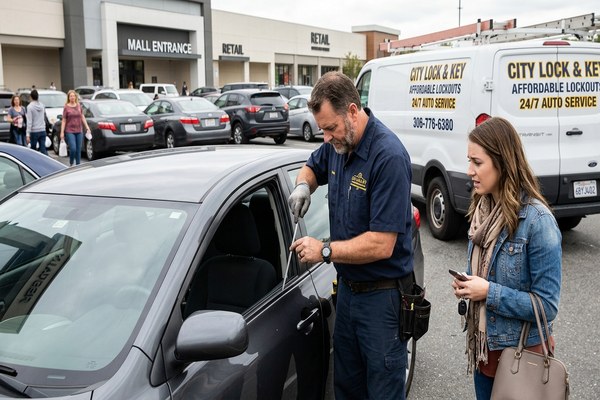
Being locked out of your vehicle is the most common locksmith call. A legitimate technician will use a long reach tool or air wedge -- the job typically takes 5-15 minutes.
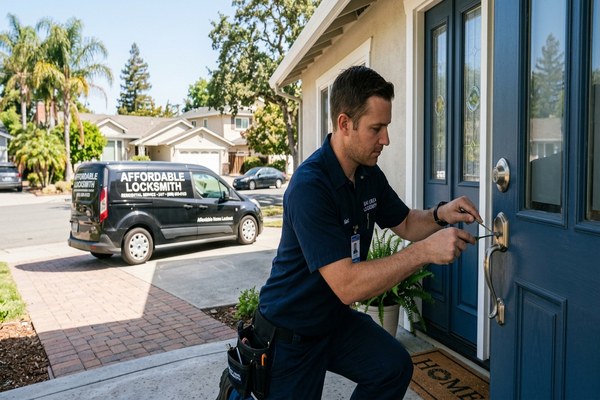
Standard residential lockout on a pin-tumbler deadbolt. Price increases for high-security locks, lever handles that require disassembly, or after-hours calls.
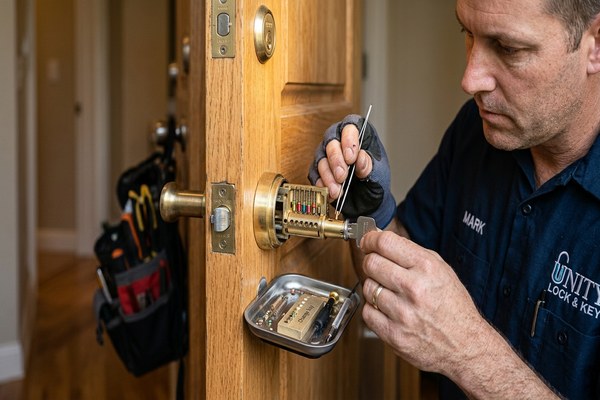
Rekeying changes the internal pins so old keys no longer work. It is cheaper than replacing the lock and recommended when moving into a new home or after losing a key.
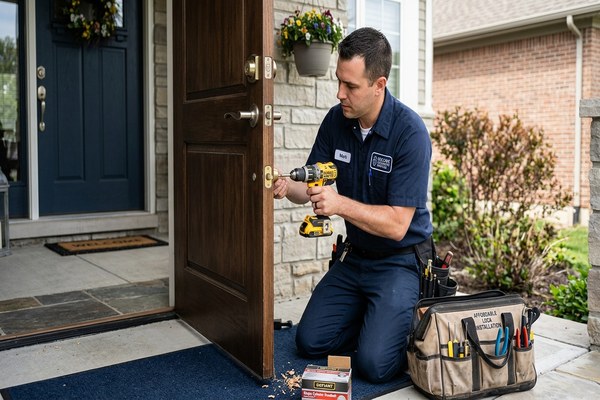
Installing a new deadbolt or lockset on an existing door prep typically costs $65-$120 in labor. High-security locks (Medeco, Mul-T-Lock) add $50-$150 to the hardware cost.
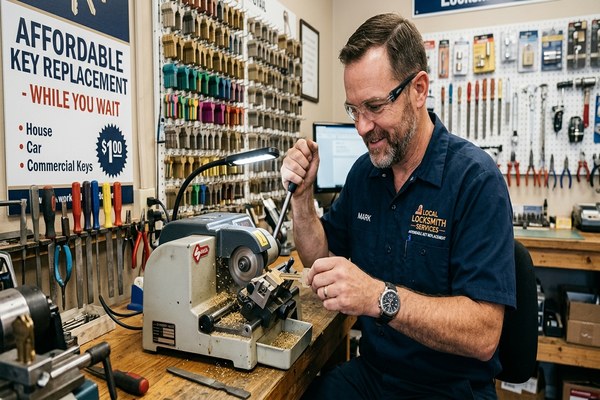
Replacing a lost car key with a transponder or smart key requires specialized programming equipment. This is one of the most legitimately expensive locksmith services.
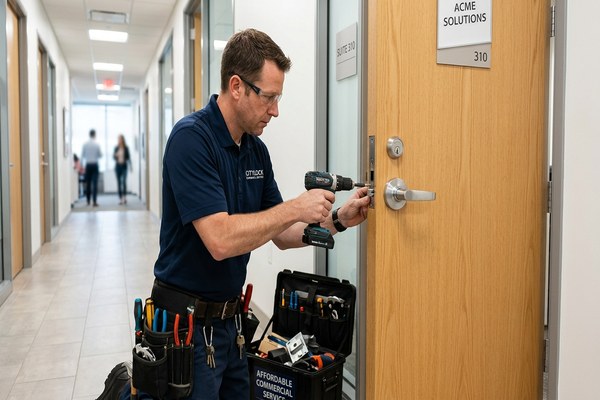
Access control, master key systems, and commercial-grade hardware have higher material and labor costs. Get 3 quotes for jobs over $500 -- prices vary significantly.
Prices are US national averages for 2025. Regional variation of 20-40% is normal. After-hours surcharges of $25-$75 are standard.
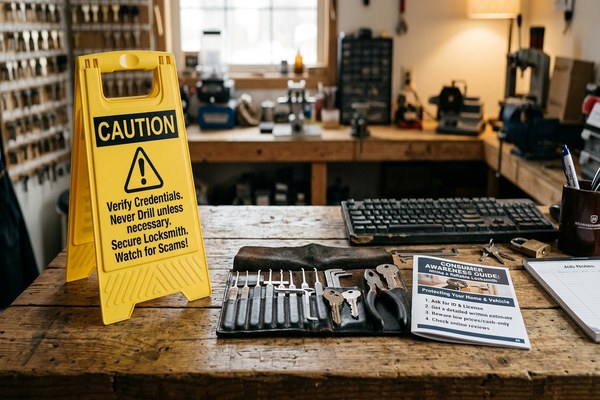
The most common locksmith scam in America works like this: A company (often a call center, not a real local business) advertises extremely low prices -- $15, $19, or $35 -- on Google ads and fake local listings. You call, they dispatch a contractor, and when the job is done the actual bill is $200-$400.
The Federal Trade Commission and local consumer protection agencies receive thousands of complaints about this practice every year. The key is to know the red flags before you call.
No licensed locksmith with real overhead (training, insurance, tools, a truck) can profitably complete a job for $15-$35. This price is designed to get a technician to your door -- then the "service call fee", "labor", and "special equipment" charges appear.
For non-emergency, security-sensitive work, choosing solely on price can cost you far more in the long run.
A locksmith who drills your lock unnecessarily or installs a cheap replacement defeats the entire purpose of having a lock. Legitimate locksmiths pick first, drill only as a last resort, and use quality replacement hardware.
In most states, locksmiths must be licensed and bonded. An unlicensed operator has no state accountability if something goes wrong -- including if your property is damaged or later burglarized using information from the visit.
A $19 advertised price that becomes $300 on arrival is not a bargain. A $95 quote from a licensed locksmith that stays $95 is cheaper -- even before you factor in time, stress, and potential property damage from untrained work.
Use this table to evaluate any quote you receive. The "fair range" column reflects what licensed, insured locksmiths across the US typically charge in 2025.
| Service | Fair Range (2025) | Suspicious | Almost Certainly a Scam | Verdict |
|---|---|---|---|---|
| Home Lockout | $65 - $125 | Under $50 | $15 - $35 advertised | Never pay $35 arrival fees |
| Car Lockout | $75 - $150 | Under $60 | $19 - $49 advertised | Get total quote upfront |
| Lock Rekeying (per lock) | $20 - $45 | Under $15 | $5 - $10 per lock | Affordable if legitimate |
| New Deadbolt Install | $65 - $175 | Under $50 | $25 flat advertised | Confirm hardware is included |
| Transponder Key Cut + Program | $150 - $350 | Under $100 | $45 - $75 advertised | Legitimate cost is high |
| After-Hours Surcharge | $25 - $75 added | Over $100 added | "Emergency fee" added on arrival | Always ask before they come |
| Service Call / Trip Fee | $0 - $25 | $25 - $75 | Hidden -- reveals on invoice | If not disclosed = scam flag |
Sources: ALOA (Associated Locksmiths of America) member survey data, FTC consumer complaint data, and independent price-checking in 50+ US cities. Prices reflect 2025 national averages.
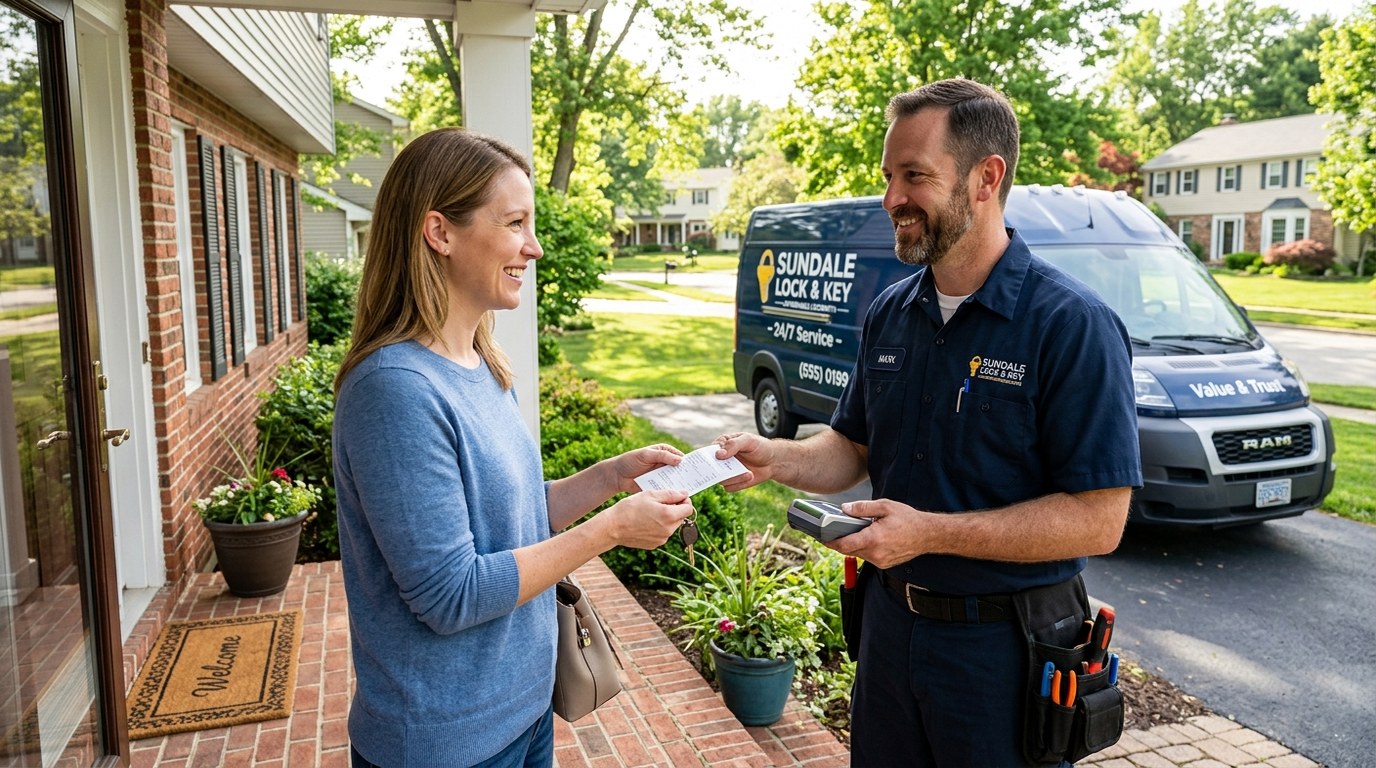
Follow these four steps every time. They add about 5 minutes and can save you $150-$300 in scam charges.
Maps listings require a verified address. A company with a pin on the map, photos of their actual shop, and 50+ reviews is far more likely to be real than a top Google Ad result with no street address.
Most states have an online license lookup (e.g. BSIS in California, TDLR in Texas). Take 60 seconds to verify the company's license is current and active before scheduling.
Call 2-3 companies. Say: "I'm locked out of my 2019 Honda Civic near downtown Denver. What is your complete all-in price including service call and labor?" If they won't give a number, hang up.
When the tech arrives, ask them to confirm the price before touching the lock. If the number changes from the phone quote, you have every right to send them away and call someone else.
Before you call any locksmith, run this 3-check verification:
This takes under 90 seconds and is the fastest way to separate legitimate businesses from scam operators.
See Our Full FAQ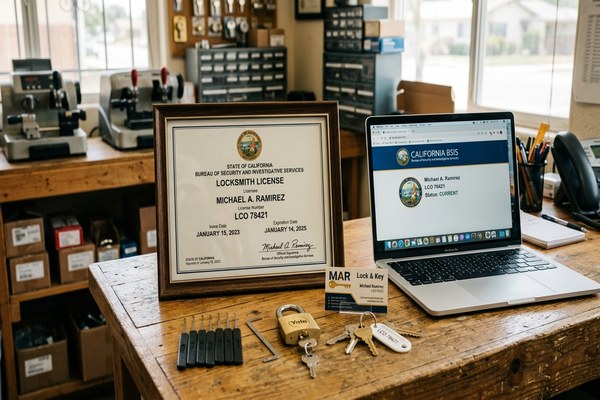
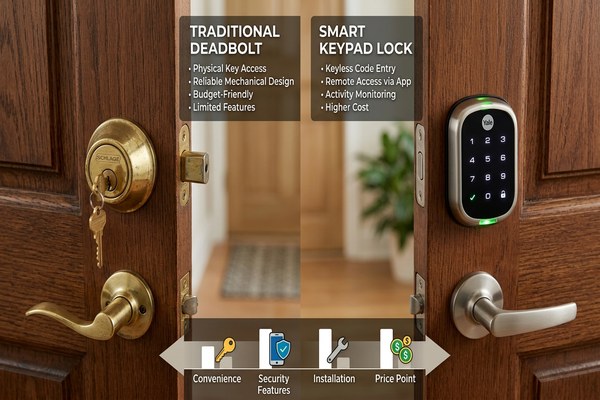
Smart locks cost $80-$300 more upfront but can eliminate locksmith calls entirely for lockout situations (you can unlock remotely via your phone). Traditional deadbolts have lower upfront cost and simpler installation.
$25-$80 hardware. No battery. Requires locksmith if locked out. 10+ year lifespan.
$100-$350 hardware. Needs battery. Remote unlock reduces lockout calls. 5-8 year lifespan.
Traditional: $25-$80 lock + 1-2 lockout calls ($150-$250 avg) = $175-$330 total. Smart: $100-$350 lock + near-zero lockout calls = $100-$350 total.
These are the tools, techniques, and scenarios a legitimate locksmith uses. Recognizing professional equipment and methods is one more way to verify you have a real technician.


Our pricing research covers major metro areas across the United States. Regional cost variations of 15-40% are normal -- use these benchmarks when evaluating local quotes.
No. The $15 or $19 price you see in Google ads is almost never the real price. This is one of the most widely-documented consumer scams in the US. The advertised price is a service call rate that does not include labor -- the actual bill is revealed after the technician is inside your home or has already started work.
The Federal Trade Commission and consumer protection agencies in California, Texas, Florida, and New York have all issued explicit warnings about this practice. Real locksmiths have overhead costs (insurance, licensing, tools, vehicles, training) that make a $15-$35 total job price economically impossible.
Fair locksmith prices in 2025 across the US:
Home lockout: $65-$125. Car lockout: $75-$150. Lock rekeying: $20-$45 per lock. New deadbolt installation: $65-$175 including hardware. Car key cut and program: $150-$350 depending on vehicle make and key type.
Prices are 15-40% higher in major metro areas (New York, San Francisco, Boston) and 10-20% lower in smaller cities and rural areas. After-hours service typically adds $25-$75 to any job.
Search Google Maps (not just Google ads) for locksmiths with 50+ reviews and 4.3+ stars -- Maps listings are harder to fake than ad results. Verify their state license at your state's licensing board website. Call 2-3 companies and ask for a complete all-in quote before anyone comes out. When the tech arrives, ask them to confirm the price before they start work.
If the final invoice is higher than the quoted price without a legitimate reason (e.g., the lock turned out to be a high-security lock that was not disclosed), you have several options: refuse to pay the excess and offer only the quoted amount, document everything and contact your state consumer protection office, and file a complaint with the FTC at reportfraud.ftc.gov.
In most states, locksmiths are required to provide a written estimate before beginning work. If they refuse, that is itself a scam indicator and you should send them away.
Not if "cheapest" means an advertised price far below market rate. The safest strategy is to get 2-3 quotes and choose the one in the fair price range with verifiable licensing and real reviews -- not the one with the lowest advertised number.
For security-critical work (installing high-security locks, building a master key system, safe work), choosing the absolute cheapest option can create real security vulnerabilities.
For older vehicles (pre-2000), slim jims and wedge tools can sometimes work with practice. However, modern cars have anti-intrusion door reinforcement that makes DIY attempts likely to damage door seals, trim, or wiring. Check if your auto insurance or roadside assistance plan (AAA, etc.) includes lockout service -- many do, at no cost to you.
Usually yes. A dealership key replacement typically costs $250-$500 and may require towing your car in. A licensed automotive locksmith can often come to you and cut+program the key on-site for $150-$350. The savings are larger on common makes (Toyota, Honda, Ford, Chevrolet) because aftermarket key blanks are widely available. Rare European makes may be dealer-only.
As of 2025, states that require locksmith licensing include: Alabama, California, Connecticut, Illinois, Louisiana, Maryland, Nebraska, New Jersey, Nevada, North Carolina, Oklahoma, Oregon, Tennessee, Texas, and Virginia. Many cities and counties in unlicensed states have their own requirements. Always ask to see a license regardless of state.
Our pricing data is based on verified research, not advertising relationships. We do not accept payment from locksmith companies to be featured.
We call 3-5 locksmiths per city quarterly using a standardized quote script and record the all-in prices for common jobs.
We cross-reference ALOA member survey data, state contractor board fee filings, and consumer protection agency complaint records.
We actively monitor FTC, BBB, and state AG complaint data to identify recurring scam operators and update our red-flag lists.
All pricing data is reviewed quarterly. Material changes in regional pricing or new scam patterns trigger immediate updates.
Use our services guide to know exactly what you should pay, then call 2-3 local locksmiths and compare quotes. Five minutes of research saves $100-$250 on average.